randomfacts
South Australian Aircraft
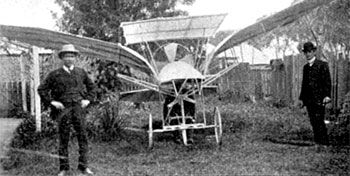
George Richardson's 1909 'Albatros' Flying Machine
This aircraft was built in George's Thebarton factory in 1909. The design was said to have been influenced by the flight of the albatros bird. It was built of a calico covered blackwood frame mounted on four bicycle wheels. It had two propellors. The wings were worked by hand levers from the pilot's seat and flapped to create lift. There is no report of this craft actually flying when it was tested in the west parklands (now called Bonython Park).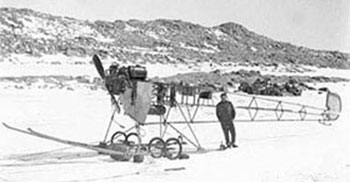
Douglas Mawson's Vickers REP 1911
Douglas Mawson arranged to import a Vickers REP monoplane when he was in England in 1911 organising and recruiting personnel for his second Antarctic expedition. During a test flight on October 4th 1911, at Cheltenham racecourse, its petrol tank exploded and the next day it crashed. It was sent south with the expedition, stripped of its wings and metal sheathing from the fuselage and used as an air tractor towing four sledges.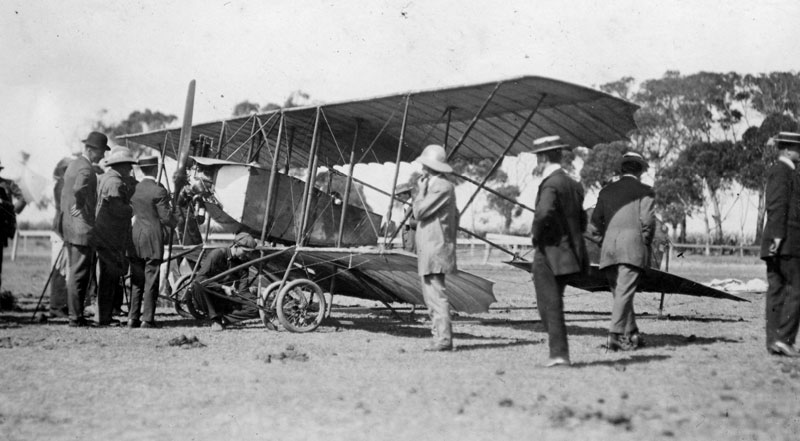
Arthur Jones Caudron 1914
Englishman Arthur Jones had undertaken flights in other parts of Australia before venturing to Adelaide. He flew a number of times around his 'base' at the Cheltenham Racecourse, flying as far as Hindmarsh. Jones took off from the racecourse at 6.30am on 2 January 1914. On the way back to Cheltenham, Jones went off course to the north, before returning to his correct course. This meant that he ran out of petrol with Cheltenham in sight and was forced to make a crash landing in a paddock on the north side of Torrens Road.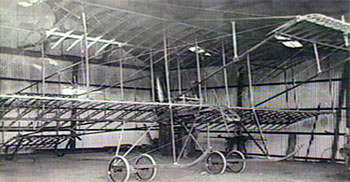
Carl Wilhelm (Bill) Wittber 1915
Following his work on the Bleriot XI in 1910, Wittber designed and built his own Farman style bi-plane, including constructing a six-cylinder radial engine (an Australian first). The plane was test flown by South Australian aviator Harry Butler at Smithfield, SA. It was the first aeroplane built and flown in South Australia. The authorities stopped all trials due to wartime conditions and the last flight made at Smithfield was early 1916. This aircraft did not survive, but the engine survived and is on display at the South Australian Aviation Museum.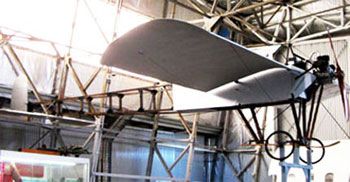
Cessna Silverwing Replica
The original Silverwing was flown by Clyde Cessna on 11th August 1911 at Enid, Oklahoma. This replica was built by Rossair, Adelaide and was displayed at Parafield and Edinburgh during the 1966 National Air Show. In February 1968 it was on display at Australia Square, Sydney. Its location was unknown for more than 40 years. This replica is now on display at the South Australian Aviation Museum.Click here for more information (.pdf)
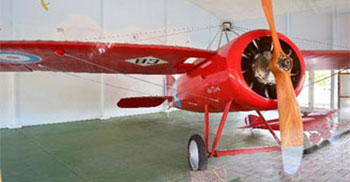
Bristol M1C Monoplane C5001
Known as the 'Red Devil' this aircraft was delivered to the Royal Flying Corps on 4th February, 1918. Capt. Harry Butler A.F.C. purchased this plane from the British Government and shipped it to South Australia in 1919 and used it to carry air mail from Adelaide to his home town, Minlaton, on 6th August 1919. This plane is on public display at Minlaton.vwma.org.au/explore/memorials/541 adb.anu.edu.au/biography/butler-henry-john-5446
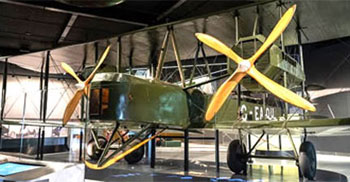
Vickers Vimy G-EAOU (1919)
G-EAOU was flown by the brothers Ross and Keith Smith, together with mechanics Jim Bennett and Wally Shiers, to victory in the 1919 England to Australia Air Race. In the process, they became the first people ever to fly from England to Australia. This plane is on display at Adelaide Airport.vickersvimy.com.au/discover/the-vickers-vimy/
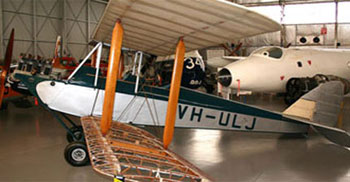
deHavilland DH-60G Gipsy Moth VH-ULJ
First Registered in 1929 as VH-ULJ in Queensland. In 1933, it was flown to New Guinea to be used by Holden's Air Transoprt, based at Salamaua, New Guinea, servicing the Bulolo goldfields. It was sold to Guinea Airways in 1937 and evacuated to Adelaide in 1942 (during WW2). It was later used by the Education Department of S.A. for instructional purposes. This plane is on display at the South Australian Aviation Museum.Click here for more information (.pdf)
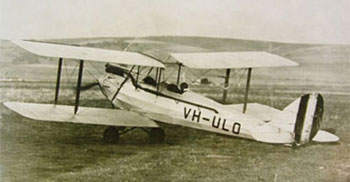
deHavilland DH-60M Gipsy Moth VH-ULO
Assigned to Australian Aero Club (S.A. section) in 1929 at Parafield. Crashed at Kapunda 1937. VH-ULO was flown by Brownie Lunn and Roy Gropler and was the aircraft that Jimmy Melrose first went solo in. This plane is in storage at the South Australian Aviation Museum (awaiting a major restoration).Click here for more information (.pdf)
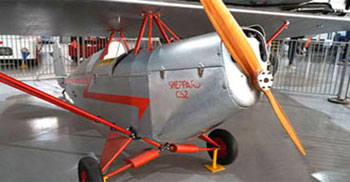
Sheppard CS2 Homebuilt
Designed and built in 1930 by Clem Sheppard at his parent's house at Kensington Park. Powered by a Henderson (Indian) motor cycle engine. This plane had fold back wings so it could be towed behind a car. It was flown at Virginia by Bill Maddocks (an RACSA instructor). This plane is on display at the South Australian Aviation Museum.Click here for more information (.pdf)
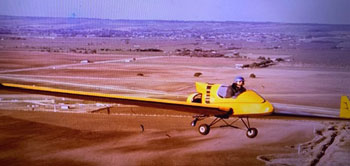
Free Flight Hang Gliders - Hornet Prototype
Free Flight Hang Gliders engaged David Betteridge to design a motorised hang glider. It developed into a flying wing. David Betteridge referred to it as a minimum-weight powered sailplane. The prototype Hornet made its first flight at Aldinga on the 8th March 1979, piloted by Mr. Colin Scott. It had an open cockpit and was built of aluminium and plywood. Power was from a rear mounted ducted fan driven by a modified Yamaha 175cc motorcycle. The prototype hornet is in storage at the South Australian Aviation Museum.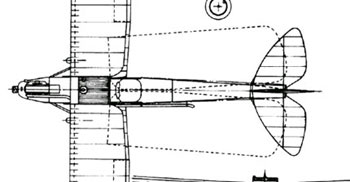
Fun Fact - Moths & Dragons
Geoffrey deHavilland, was a passionate, amateur lepidopterist (someone who studies butterflies and moths). He named his first light biplane the DH.60 Moth because when he saw the design on the drawing board, he remarked that it folded its wings 'like a moth'. deHavilland decided to name many of his aircraft after moths - such as the Gipsy Moth, Tiger Moth, Puss Moth, and Fox Moth etc. The dragon names were reserved for larger, twin-engined civilian transports and airliners like the DH.84 Dragon.
Copyright randomfacts.com.au 2026
You may not reproduce or communicate any of the content on this website(unless otherwise indicated).
enquiries@randomfacts.com.au
You may not reproduce or communicate any of the content on this website(unless otherwise indicated).
enquiries@randomfacts.com.au
There is no AI-generated content on this website