randomfacts
Adelaide Hills Business & Industry Index
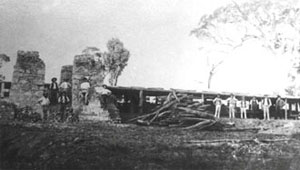
Littlehampton & Scott Creek Brickyards
From the earliest days of the colony, Littlehampton and Scott Creek brickyards used their rich natural clay and shale deposits to make bricks and provide for the growing colony's demand for strong, lasting building materials and firebricks. This section uncovers the stories, locations, and families behind the historic brickmakers of the Adelaide Hills.Click here for Brickyards Page Pic: L.T. Watts Brickyard circa 1890 Littlehampton
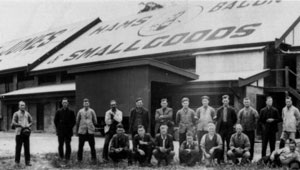
Adelaide Hills Meatworks
Long before modern refrigeration and global supply chains, the Adelaide Hills relied entirely on local livestock and skilled tradesmen to sustain its growing population. The early meatworks, slaughterhouses, and butcheries of the region were vital to daily survival, transforming local pastoral lands into a thriving, essential industry. This section honors the families and workers who kept the pioneer communities running.Click here for Meatworks Page Pic: Foggitt Jones Meatworks circa 1930 Littlehampton
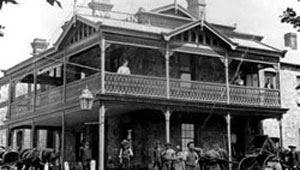
Hills Hotels & Breweries
In the early days of South Australian settlement, hotels and breweries were far more than just places to grab a drink. They were the beating hearts of the Adelaide Hills communities. Local pubs served as vital community hubs where pioneers met to trade, hold court, rest their horses, and celebrate, while early local breweries crafted beers to quench the thirst of hardworking locals.Click here for Hotels & Breweries Page Pic: Gray's Inn Mount Barker circa 1870
More to come later.
Dairy factories at Blakiston, Mount Barker, Macclesfield & Meadows
Kondoparinga dairy factory, nr. Meadows
SA Farmers' Union factory, Mawson Rd, Meadows
Nixon's mill, nr Hahndorf (1842)
Dunn's flour mill, Cameron Street Mount Barker (1844)
Johnson's mill, Nairne (c1850s)
Albert Mill, Nairne (1857)
Wittwer's mill, Hahndorf (1864)
Burley flour mill, Meadows (1840-63)
Silk Industry
At Littlehampton in mid 1850's. Mrs. Fleet had between ten and twenty thousand worms in boxes. She displayed her silk in several February shows. Her neighbours gave her their mulberry leaves.Adelaide Hills Bee Keeping
In South Australia around 1880, beehives were transitioning from traditional shapes to more modern designs, with dome-shaped straw skeps and rectangular wooden boxes being the most common types. In the mid 1880s amidst a crisis over the threat to the honey industry from the hive disease 'foul brood', 86 bee-keepers in the Mount Barker area added their signatures to a petition in support of a parliamentary bill aimed at curbing the spread of the disease.Adelaide Hills Dairies
Creameries at Bull Creek, Dawesley, nr. Dawesley (Native Valley) & EchungaDairy factories at Blakiston, Mount Barker, Macclesfield & Meadows
Kondoparinga dairy factory, nr. Meadows
SA Farmers' Union factory, Mawson Rd, Meadows
Adelaide Hills Milling
Dunn's first mill, Hay Valley (c1841-42)Nixon's mill, nr Hahndorf (1842)
Dunn's flour mill, Cameron Street Mount Barker (1844)
Johnson's mill, Nairne (c1850s)
Albert Mill, Nairne (1857)
Wittwer's mill, Hahndorf (1864)
Burley flour mill, Meadows (1840-63)
Adelaide Hills Mining & Smelting
Some of the State's most significant early mines were established in the Mount Barker District. Major mining areas included Echunga/Meadows (gold, etc.), Callington/Kanmantoo (mostly copper), Aclare near Callington (produced the highest volume of silver in 19th Century), and Brukunga (Iron Pyrites) The Mount Barker Mineral Survey was undertaken in 1845, and in the following year the Paringa and Kanmantoo mines were opened. The Bremer mine was discovered in c1847, and by 1848 the country's first smelter was established there. The Bremer mine settlement became the town of Callington. Other mines in the area were West Kanmantoo; Wheal Fortune, Margaret, Prosper, Mary, Friendship, Elizabeth & Maria; also Menkoo & Tresevean.Adelaide Hills Tanneries
South Australia's first tannery outside of Adelaide was established by Henry Timmins at Nairne in c.1851. In 1853, Storch constructed a tannery near the Hahndorf Windmill in 1853, and moved nearer to Verdun in 1858. There were also several wattle-bark mills in the district.
Copyright randomfacts.com.au 2026
You may not reproduce or communicate any of the content on this website(unless otherwise indicated).
enquiries@randomfacts.com.au
You may not reproduce or communicate any of the content on this website(unless otherwise indicated).
enquiries@randomfacts.com.au
There is no AI-generated content on this website